Oct 29 / FOG Academy

What Is FOG, and Why Is It Every Kitchen’s Problem?

Key Takeaways

  • Fat, oil and grease, often called FOG, can cool and solidify inside drain pipes, causing costly kitchen blockages

  • For commercial food businesses, FOG can lead to service disruption, poor hygiene conditions and compliance concerns

  • Consistent daily habits, clear cleaning routines and staff training prevent most FOG-related drain problems

Why a busy service can become a drainage emergency

Picture a full dinner service: tickets are coming in, pans are moving, and then a sink stops draining. Foul odours spread, wastewater begins to rise, and a team member has to pause food prep while the kitchen tries to contain the mess.

A blockage rarely starts with one large mistake. Small amounts of warm fats, oils and grease, often called FOG, wash from roasting trays, frying pans, plates and mop water into the drain. As the grease cools, it sticks to pipe walls and catches food scraps, slowly reducing the space available for water to pass.

So, the risk builds during normal work, especially when a kitchen is busy and clean-down must happen quickly. A few seconds spent scraping a pan into the bin can prevent repeated grease deposits from entering the sink.

If you do one thing, keep FOG out of the drain at the source. Train every role, from chefs to kitchen porters, to scrape, collect and bin grease before washing equipment, then check that strainers and grease-control equipment are cleaned on schedule.

Where FOG enters your kitchen drains every day

Also, FOG often enters the drain through routine cleaning rather than one obvious spill. A fryer basket dripping over the sink, pan juices tipped away after service, and oily residue washed from roasting trays can all send fats, oils, and grease into pipework. In a busy kitchen, even a small amount from each task can add up over one shift.

The less obvious sources matter too. Creamy sauces, butter, cheese, mayonnaise, salad dressings, gravy, dairy-based leftovers, meat trimmings, and food scraps can carry grease into the sink or dishwasher. If you do one thing, scrape plates, trays, and pans into a food-waste container before they reach the wash area.

Why a quick rinse can cause a bigger problem

Next, warm water can make a greasy pan look clean, which is why rinsing it may feel harmless. The heat keeps grease moving for a short distance, but it cools as it travels through the pipes. Then it sticks to pipe walls and catches other waste, including soap residue and small food particles.

A common mistake is relying on hot water or washing-up liquid to solve the issue. They may move grease farther along the drain, but they do not remove it from the system. In practice, wipe pans with disposable paper or use a scraper first, then wash them as normal.

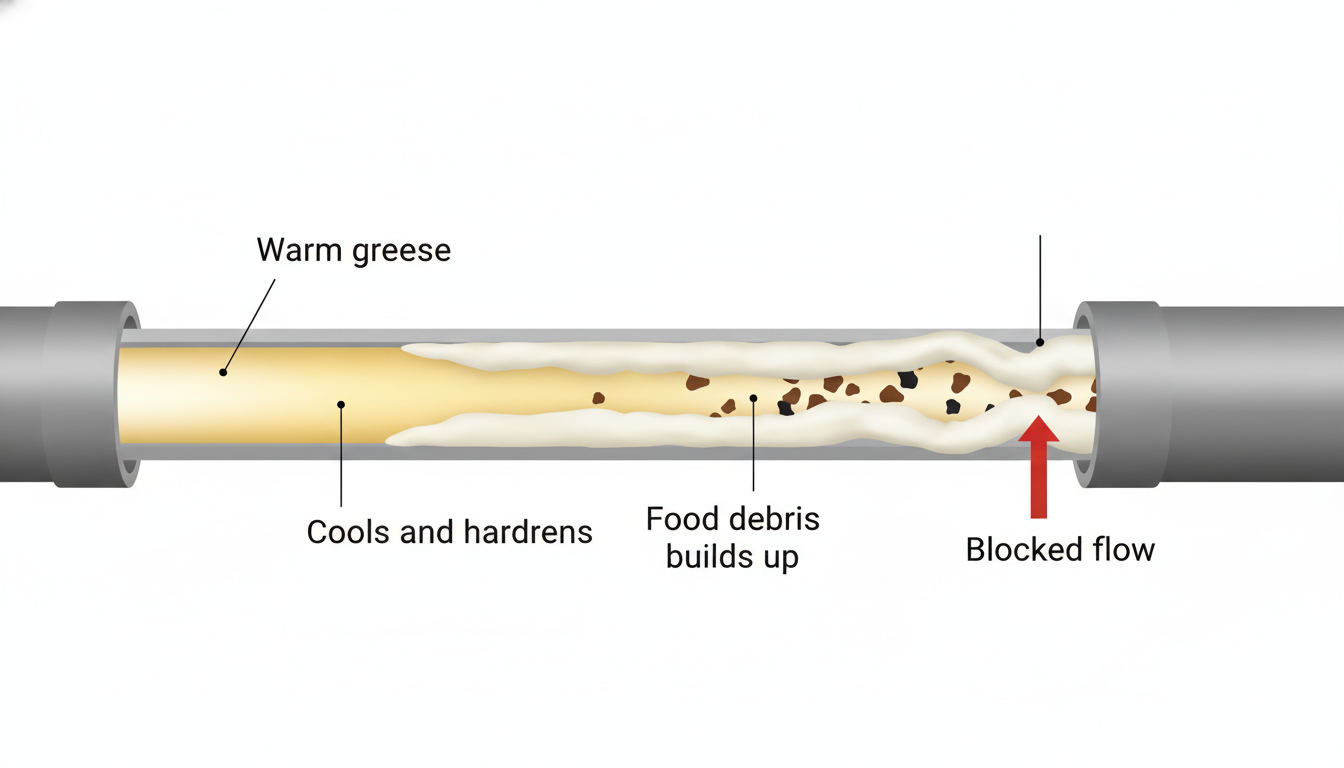
How warm grease turns into a hard blockage

Next, follow what happens after hot cooking oil, fat and grease enter the drain. It may look like a liquid as it leaves a fryer, roasting tray or wash-up sink, but it cools quickly once it reaches colder pipework. As it cools, it sticks to the pipe walls and forms a waxy layer.

Each rinse adds another thin coating. Food scraps, flour, rice and detergent residue can catch on that coating, so the open space inside the pipe gets smaller. A busy kitchen may send dozens of greasy pans and plates to the wash-up area during one service, giving deposits time to build faster than staff expect.

But a blockage does not need to start as a full pipe of grease. Even a narrow grease ring can slow drainage, trap more debris and cause dirty water to back up at the sink. If you do one thing, keep grease out of the drain before it cools by scraping plates and containers into the correct waste bin first.

The problem can continue beyond your premises. In public sewers, grease can combine with wet wipes and other items that should not be flushed, creating much larger solid masses often called fatbergs. A small disposal habit in a commercial kitchen can therefore contribute to drainage failures farther along the sewer line.

What a FOG blockage could cost your business

Also, a FOG blockage can affect far more than one slow sink. Grease, oils and fats can cause slow drains, bad odours, standing water and, in severe cases, flooding in food preparation or customer areas. A kitchen porter may lose 20 minutes clearing and reporting a backed-up drain, while chefs and front-of-house staff work around disrupted washing, cleaning and service routines.

Pest activity can follow when waste water or food residue remains around drains. If flooding reaches stock, packaging or electrical equipment, the clean-up may take longer and may require areas of the kitchen to be closed until they are safe to use.

Next, consider the cost beyond the immediate call-out. Your business has a duty to keep waste out of drains and dispose of cooking oil through an approved collection route, rather than pouring it into sinks, floor drains or external gullies. If a blockage damages shared drainage or the public sewer, the business may face investigation and could be asked to cover repair or cleaning costs.

If you do one thing, make used cooking oil collection and drain checks part of every shift. A labelled oil container, a booked collection service and a quick end-of-service check are usually less disruptive than an emergency plumber during a busy period.

What can your team change today to keep FOG out of drains?

What goes down the sink does not disappear. Fats, oils and grease, often called FOG, can cool inside pipework, stick to the walls and build into a blockage long after a busy service ends.

So, choose one habit to change before the next shift. For example, place a grease container beside the wash-up area, scrape plates into the bin before rinsing, or assign one team member to check that no cooking oil is tipped into the sink.

If you do one thing, make grease collection easy at the point where it is made. A container that is five steps away is often ignored during a rush; a labelled container beside the fryer or prep bench is much more likely to be used.

Ask your team: what one habit could we change today to keep FOG out of the drain? A small, consistent change can help protect your pipes, reduce disruption and keep service moving.

Help your team prevent FOG every day

Created with